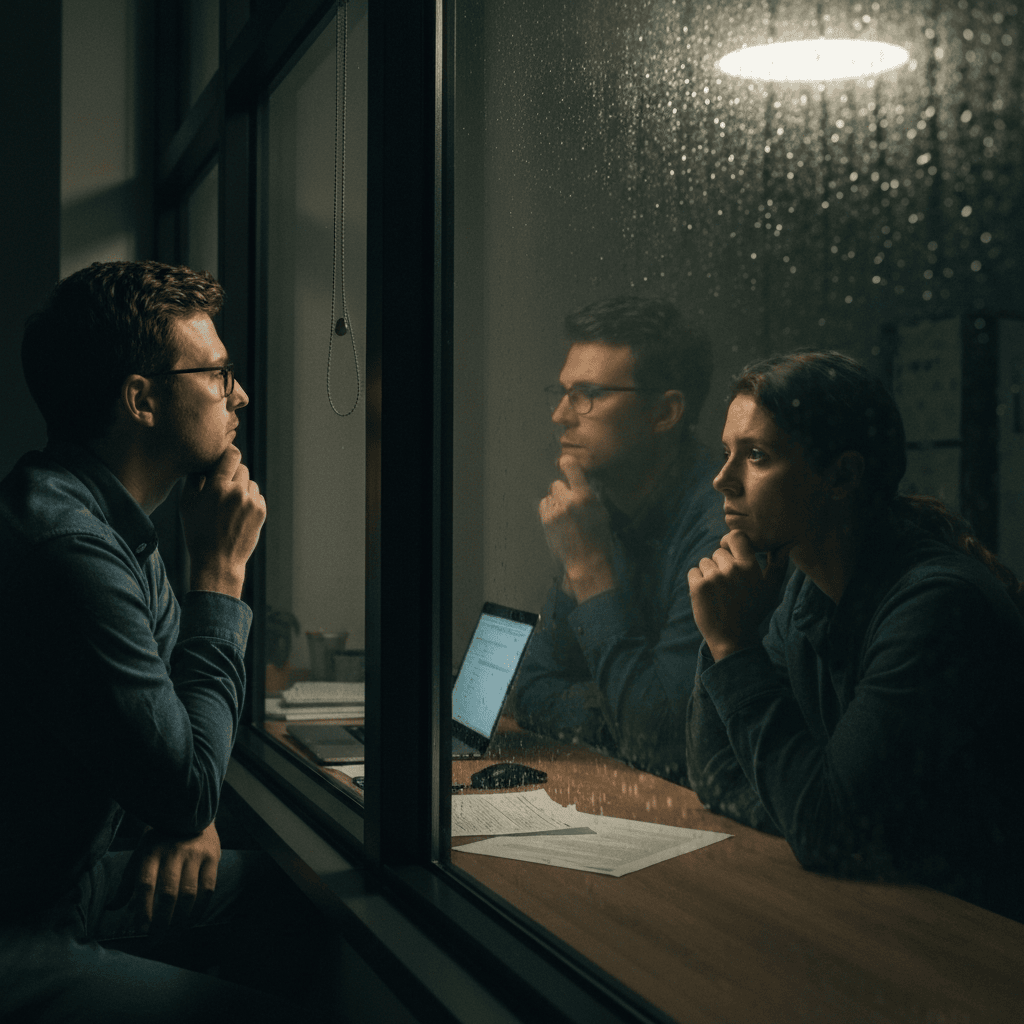
Entrepreneur Burnout: When Your Passion Becomes Your Prison
You started this business because you couldn't imagine doing anything else.
The early mornings felt electric. The late nights were fuel. Every challenge was proof you were built for this. Your passion wasn't just motivation—it was your identity.
And now? That same fire is consuming you.
You're not lazy. You're not weak. You're experiencing what happens when dedication meets depletion. When the thing you love most becomes the thing draining everything from you.
This is entrepreneur burnout. And if nobody's told you yet: it's not a personal failure. It's a predictable result of an unsustainable equation.
Let's talk about what's really happening—and what actually works to get you back.
The Burnout Trap for Business Owners
Here's the cruel irony of entrepreneur burnout: the very qualities that made you successful are the same ones driving you into the ground.
Your ability to push through discomfort? It means you ignore warning signs until they become emergencies.
Your commitment to your vision? It makes rest feel like betrayal.
Your high standards? They turn every small setback into evidence you're not doing enough.
Unlike a traditional job, there's no clear boundary between work and life. Your business doesn't clock out at 5 PM. It lives in your phone, your inbox, your mind at 3 AM when you should be sleeping. It's there when you're eating dinner with your family, whispering about that client email you haven't answered.
The trap springs slowly.
At first, the long hours feel purposeful. You're building something. Sacrifices are investments. You tell yourself this is temporary—just until you hit that next milestone, that revenue goal, that team expansion.
But the milestones keep moving. The goals get replaced by bigger goals. The temporary becomes permanent.
And somewhere along the way, you stopped running toward something and started running on fumes.
The statistics tell a brutal story. Studies show entrepreneurs are significantly more likely to experience burnout than traditional employees. A Harvard Business Review survey found that 25% of entrepreneurs feel moderately burned out, and another 3% report severe burnout that impacts their ability to function.
But statistics don't capture what it actually feels like. The numbness where excitement used to live. The dread on Sunday nights—not because you hate your work, but because you're exhausted by how much you love it and how little you have left to give.
Signs Your Business Is Burning You Out
Burnout doesn't arrive with a dramatic announcement. It creeps in through small symptoms you rationalize away until they're too big to ignore.
You're productive but not present. You can go through the motions of your workday, check off tasks, and handle meetings. But you feel like you're watching yourself from outside your body. Nothing lands. Nothing satisfies. You're performing "entrepreneur" instead of being one.
Recovery doesn't work anymore. You used to bounce back after a long week. Now weekends feel like you're just waiting to be tired again. Vacations (when you take them) leave you more stressed, thinking about everything piling up. The breaks that used to restore you barely make a dent.
Your body is sending distress signals. Persistent tension in your neck and shoulders that no massage fully releases. Headaches that show up like clockwork. Digestive issues. Insomnia or sleeping too much. Your physical self is screaming what your mind won't admit.
Irritability has become your default. You snap at team members over minor issues. You have less patience with clients. The people closest to you get the worst version of you because you've spent all your good energy performing for everyone else.
Cynicism has replaced passion. Remember when you used to light up talking about your business? Now you feel a quiet resentment. Maybe even contempt—for your clients, your industry, or the naive version of yourself who thought this would be different.
Decision fatigue is crushing you. Every choice feels weighted. What used to be quick calls now paralyze you. You avoid decisions entirely, letting things drift because you can't summon the energy to care.
You've forgotten why you started. The vision that launched this whole thing? It's buried under operational demands, client fires, and the relentless pressure to keep the machine running. You're surviving, not thriving.
Here's what makes entrepreneur burnout especially insidious: you can't just quit. This isn't a job you can walk away from. Your livelihood, your team's livelihood, maybe your family's financial security—it all depends on you showing up.
That reality makes the burnout worse. And the worse the burnout gets, the harder it is to show up effectively. It's a spiral with no obvious exit.
Why Rest Alone Won't Fix It
If you've hit this point, someone has probably told you to "just take a break." Maybe you've even tried it.
A long weekend. A week off. A month where you tried to step back and delegate more.
And you probably noticed something frustrating: it didn't really work.
You rested, but you didn't recover. You slept, but you didn't feel restored. You stopped working, but your nervous system didn't get the memo.
This is the dirty secret about burnout that most advice ignores: it's not just mental exhaustion. It's physical. It's stored in your tissues, your muscles, your breathing patterns, your baseline stress response.
Your body has been in survival mode for so long that it's forgotten how to shift out of it.
Think about what happens when you're constantly stressed. Your system stays primed for threat. Your muscles hold tension even when you're "relaxing." Your breathing stays shallow. Your heart rate variability—a key marker of resilience—decreases.
These aren't just symptoms. They're patterns that get locked into your physiology. And they don't automatically reset just because you took a vacation or started meditating for ten minutes a day.
This is why so many burned-out entrepreneurs find themselves trapped in a frustrating cycle. They know they need to recover. They make genuine efforts to rest. But the recovery doesn't stick because they're only addressing the mental layer while their body remains stuck in chronic stress mode.
Traditional approaches have real limits here.
Therapy helps you understand your patterns, but understanding alone doesn't release the tension held in your shoulders.
Meditation teaches you to observe your thoughts, but observation doesn't automatically discharge the accumulated stress energy in your system.
Time off removes the immediate stressor, but your nervous system doesn't recalibrate just because you're sitting on a beach instead of sitting at your desk.
This isn't to dismiss these tools—they all have value. But they're incomplete solutions when your body itself has become a stress container.
What's needed is something that works on the physical layer directly. An approach that helps your nervous system complete the stress cycle it's been stuck in, sometimes for years.
Body-Based Recovery for Entrepreneurs
Your body knows how to release stress. It has natural mechanisms for discharging accumulated tension and returning to balance.
Watch any animal after a near-death experience. A gazelle that escapes a lion doesn't just walk away calmly. It trembles, shakes, and moves in seemingly random ways. Then it returns to grazing, completely at ease. The threat is processed and released, not stored.
Humans have this same capacity. But we've socialized ourselves out of it.
We've learned to suppress the body's natural stress release responses. To sit still when we want to move. To "keep it together" when our system wants to discharge. To push down the physical sensations of stress because they're inconvenient or unprofessional.
The result? That stress doesn't disappear. It gets stored. Layer upon layer, year after year. Until your body is carrying the accumulated weight of every deadline, every difficult conversation, every sleepless night you powered through.
Body-based approaches work by reconnecting you with your natural stress release mechanisms.
These aren't complicated techniques that require years of practice. They're simple, research-backed methods that help your nervous system do what it already knows how to do—when given the right conditions.
Here's what this looks like in practice:
Your body holds stress in specific patterns. For most desk-bound entrepreneurs, that means chronic tension in the hip flexors, shoulders, and jaw. These areas lock down as part of your stress response and don't automatically release when the stressor passes.
Gentle, targeted movements can help these areas begin to let go. Not through force or pushing, but through creating safety and allowing your body's natural release mechanisms to activate.
When this happens, something shifts. People often report feeling lighter, more grounded, sleeping better, having more energy. Not because they've added something new, but because they've cleared out what was weighing them down.
Why this matters for entrepreneurs specifically:
Your work requires high cognitive function. Creativity. Decision-making. Strategic thinking. Emotional intelligence for managing teams and clients.
All of these capacities are directly impacted by your nervous system state. When you're stuck in chronic stress, your brain literally functions differently. The prefrontal cortex—responsible for executive function—gets less blood flow. The amygdala—your threat detector—gets more.
This means that burnout doesn't just make you feel bad. It makes you worse at your job. Your decisions suffer. Your creativity dims. Your patience with others thins.
Releasing stored stress doesn't just help you feel better. It helps you lead better, create better, and show up as the entrepreneur you actually want to be.
The approach is practical:
You don't need to quit your business to recover. You don't need a six-month sabbatical. You don't need to become a different person.
What you need is a consistent practice that helps your body process what it's been holding. Something that fits into your actual life—even when that life is demanding.
Most entrepreneurs who discover body-based recovery wish they'd found it years earlier. Not because it's magic, but because it's addressing the layer of burnout that nothing else was touching.
Sustainable Success Without Sacrifice
Let's be clear about something: the goal isn't to become someone who doesn't work hard.
You're an entrepreneur for a reason. You like building things. You thrive on challenge. A life without meaningful work would bore you to tears.
The goal is to work from a full tank instead of running on fumes. To be fueled by genuine energy instead of adrenaline and cortisol. To enjoy the journey instead of just surviving it.
Sustainable success requires a different operating system than the one that got you here.
Recovery becomes non-negotiable, not optional. You don't skip workouts because you have a busy week. You don't sacrifice sleep to squeeze in more hours. You protect your recovery practices like you protect your most important client calls—because your capacity to perform depends on them.
You learn to recognize early warning signs. Before burnout becomes a crisis, there are signals. Tension building in your body. Sleep quality declining. Motivation starting to waver. When you're attuned to your physical state, you can course-correct before you're in crisis.
You build systems that don't depend on your personal heroics. Burnout often comes from being the bottleneck for everything. Sustainable success means building a business that can function when you're not operating at 100%—which is most of the time, if you're honest.
You redefine what success looks like. Revenue and growth are important. But so is your health, your relationships, your enjoyment of daily life. Burning out to build something impressive isn't success. It's a prison with golden bars.
You stop wearing exhaustion as a badge of honor. Hustle culture celebrates working yourself to death. But the entrepreneurs who last—the ones still thriving decades in—are the ones who figured out how to sustain the marathon, not just sprint the first mile.
Here's what becomes possible when you're no longer running on burnout:
You make clearer decisions because your brain isn't fogged by chronic stress.
You lead your team more effectively because you're not constantly irritable and depleted.
You solve problems creatively because you have the cognitive bandwidth for innovation.
You enjoy your work again because it's coming from passion instead of desperation.
You're present with your family because you're not mentally still at the office.
Your body feels like your ally instead of a burden to drag through each day.
This isn't about working less (though you might). It's about working differently. From a foundation of physical and nervous system health that makes everything you do more effective.
The entrepreneurs who understand this have an unfair advantage. They can sustain output that burns out their competitors. Not because they're pushing harder, but because they're recovering smarter.
Taking the First Step
You didn't build your business overnight. You won't recover from burnout overnight either.
But you can start today. With something simple. Something your body has been waiting for.
Pay attention to where you're holding tension right now, as you read this. Your shoulders. Your jaw. Your stomach. Just notice.
That noticing is the first step. Becoming aware of what your body is carrying, instead of overriding it and pushing through.
From there, you can begin exploring what actually helps your system release what it's been holding. What allows your natural stress discharge mechanisms to activate. What helps you move from surviving to thriving.
Your passion built something meaningful. Now it's time to make sure you can actually enjoy it.
Frequently Asked Questions
How long does it take to recover from entrepreneur burnout?
It depends on how long you've been running depleted and how consistently you practice recovery. Most people notice shifts within a few weeks of regular body-based practice—better sleep, less tension, more patience. Deeper recovery often takes 2-3 months of consistent work. The good news is that recovery compounds: each session builds on the last, and your capacity to bounce back from stress improves over time.
Can I recover from burnout without stepping back from my business?
Yes. While severe burnout might require temporary changes to your workload, most entrepreneurs can recover while continuing to run their business. The key is adding effective recovery practices rather than waiting for some mythical "slow period" to arrive. Body-based approaches can be done in 15-20 minutes and integrate easily into busy schedules. The challenge isn't usually time—it's making recovery a genuine priority instead of something you'll "get to eventually."
What's the difference between being stressed and being burned out?
Stress is a response to current demands—it comes and goes based on what's happening. Burnout is what happens when stress becomes chronic and depletes your reserves. Key differences: with stress, you still feel like yourself and recovery works; with burnout, you feel disconnected from your passion and rest doesn't restore you. Stress is like a sprint that tires you out; burnout is like running on an injury until you can barely walk.
Why does burnout affect entrepreneurs more than regular employees?
Several factors combine: no clear work-life boundaries (your business is always "on"), personal financial stake that increases pressure, responsibility for others' livelihoods, identity fusion with your work (if the business fails, you fail), and fewer external structures forcing breaks. Employees can mentally "clock out"—entrepreneurs rarely can. Additionally, the personality traits that drive entrepreneurship (high achievement, risk tolerance, relentless drive) also predispose people to push past healthy limits.
How do I know if body-based approaches will work for me?
If you've tried mental strategies (meditation, therapy, mindset work) and still feel physically tense, exhausted, and unable to fully relax, body-based approaches address a different layer that might be your missing piece. They work particularly well for people who "carry stress in their body"—tension headaches, chronic shoulder/neck issues, jaw clenching, digestive problems. The practice itself will tell you quickly—most people notice something shifting in their first few sessions, even if deeper recovery takes longer.
Last updated: February 2, 2026